Server Room Migration Preliminary Plan
Server Room Migration Preliminary Plan
Server room migration preliminary plan: inventory, move waves, rollback thinking and power/network dependencies before racks are bought.
Project context
- Setting: Mainland / GBA office server room move
- Scale: Single server room / IDF-dense room migration to new floor or building
Challenge
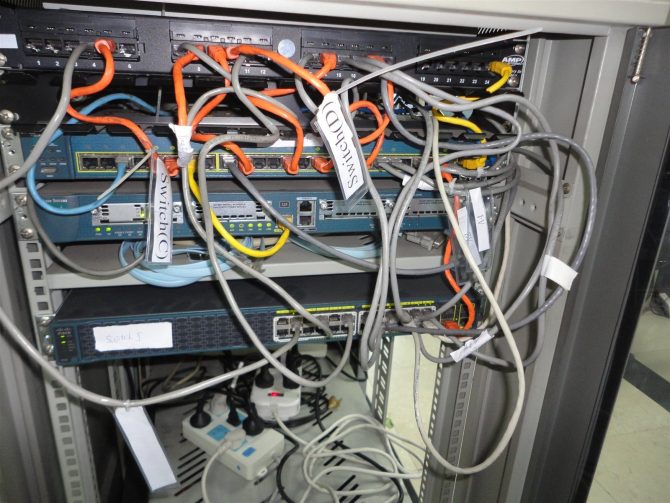
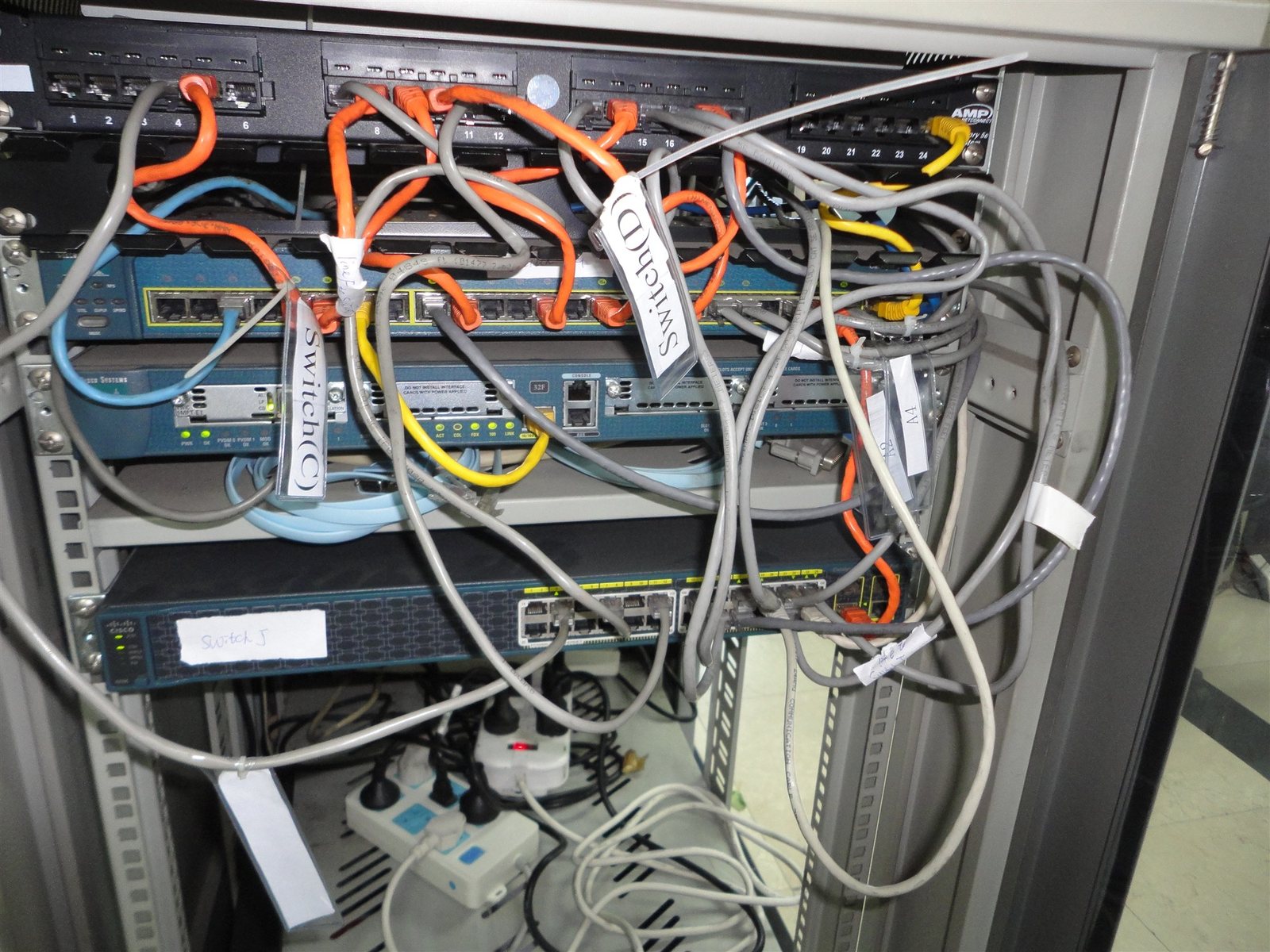
Facilities planned a move of the office server room. Stakeholders needed a preliminary migration plan: inventory, wave design, rollback thinking, power/network dependencies—before purchasing racks or booking elevators. Risk of treating migration as “unplug Friday night” without dependencies.
Environment
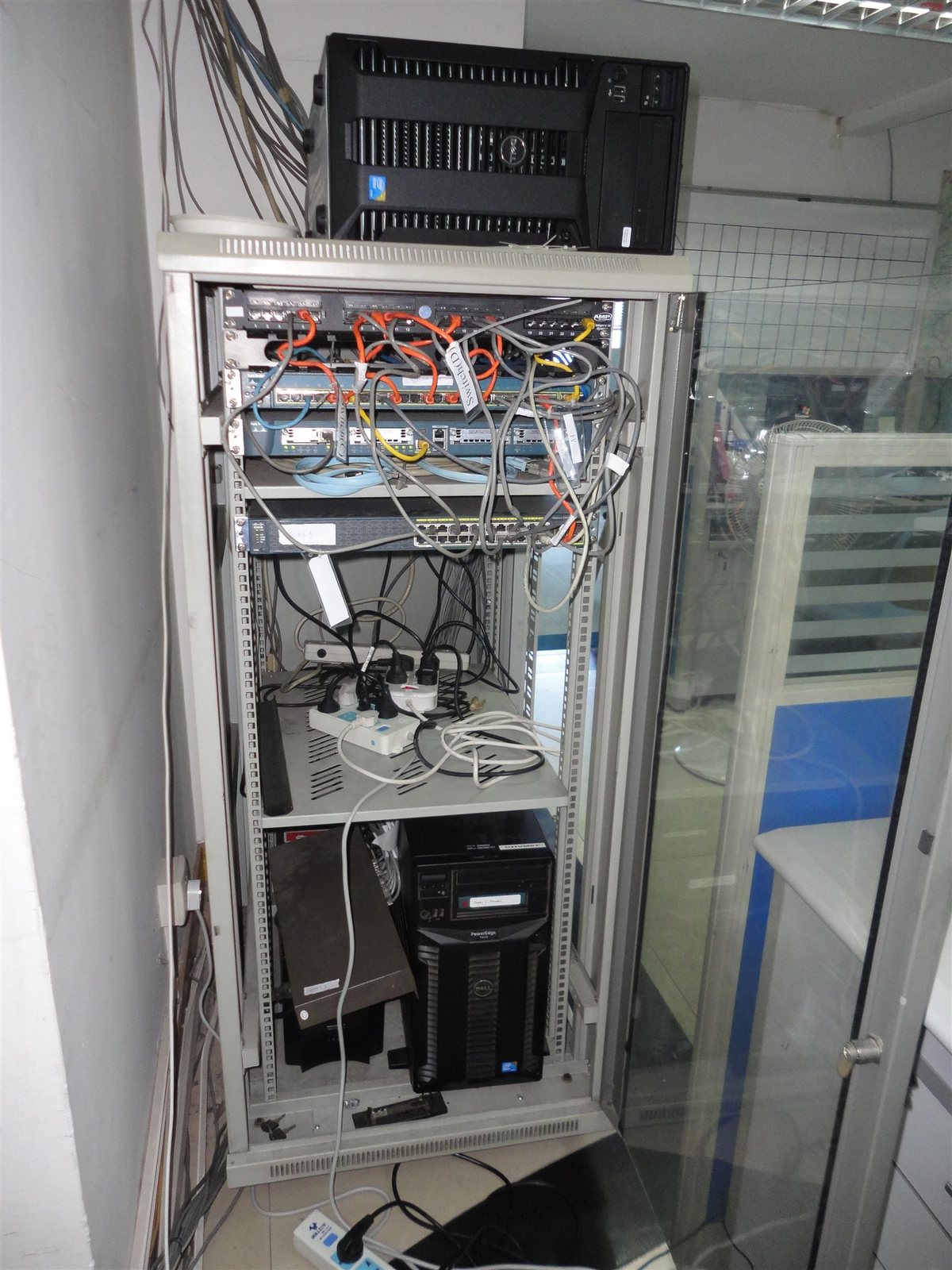
- Source room with mixed servers, NAS, network stack, CCTV NVR possible
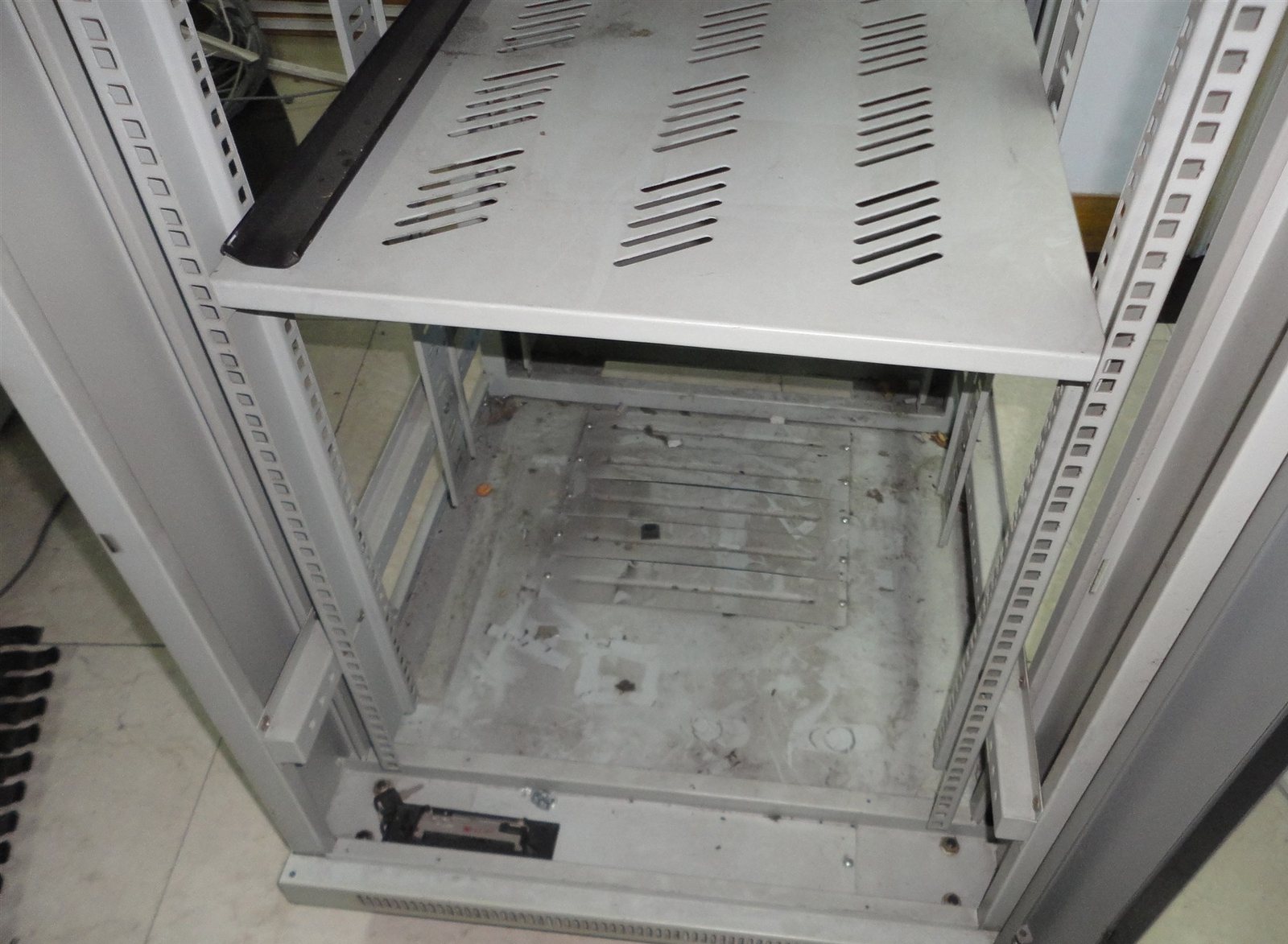
- Target room with power/cooling assumptions to validate
- Business apps with undocumented owners
- Limited maintenance windows
Solution architecture
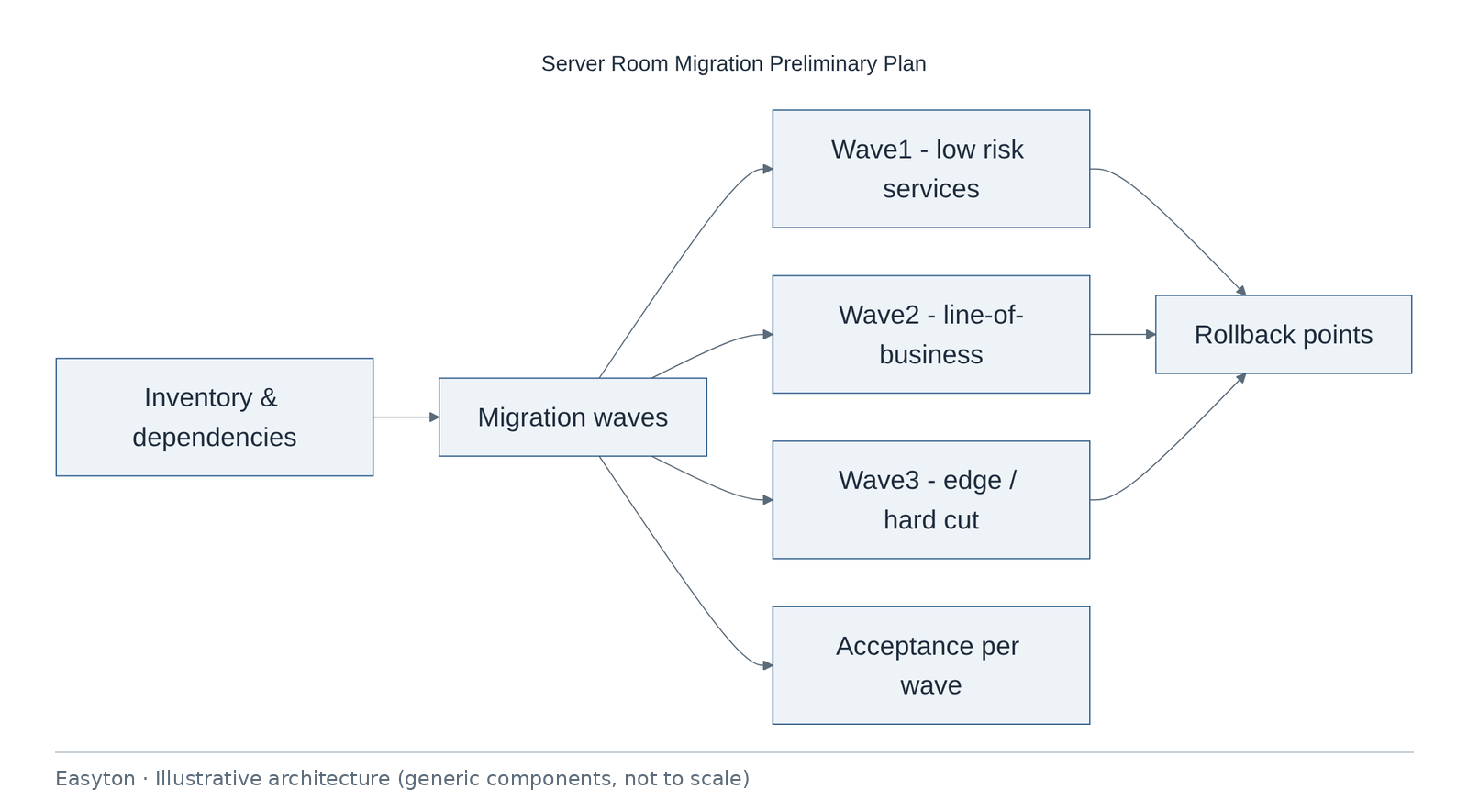
Text view of the architecture (each line: component → what it connects to):
Inventory & dependencies → Migration waves
Migration waves → Wave1 - low risk services, Wave2 - line-of-business, Wave3 - edge / hard cut, Acceptance per wave
Wave1 - low risk services → Rollback points
Wave2 - line-of-business → Rollback points
Wave3 - edge / hard cut → Rollback points
Technical highlights
Inventory dimensions
- Device role · dependencies · power plug type · rack U · network ports · backup state · owner
- Hosts documented with role labels such as
Server-AorNAS-01.
Wave design
- Prefer migrating stateless or easily rebuilt services first.
- Domain controllers / firewalls planned with explicit auth impact notes.
- Physical rack-and-roll vs rebuild-in-target decision tree.
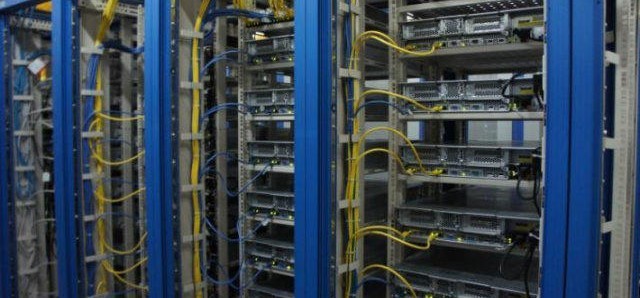
Network & cabling
- Target IDF patch plan ready before move day.
- Temporary parallel uplinks if overlap window exists.
Power / cooling
- Preliminary plan lists questions to validate (circuit capacity, UPS runtime); capacity figures come from facilities, not assumptions.
Rollback
- Each wave defines abort criteria (e.g. auth broken, backup unreachable).
- No “zero downtime” promise unless the architecture genuinely runs in parallel and this is contracted.
Implementation steps
- Discovery inventory.
- Dependency map workshop.
- Target room readiness checklist.
- Preliminary wave plan + RACI.
- Risk/rollback review with app owners.
- Decide go / revise / hire specialized movers.
- Detailed runbook (follow-on SOW) → execute.
Acceptance (preliminary plan stage)
- Inventory signed as “best known”
- Waves reviewed by app owners
- Target readiness gaps listed
- Rollback principles agreed
- Preliminary plan accepted as planning baseline
Deliverables
- Inventory workbook
- Dependency notes
- Preliminary wave plan
- Target readiness checklist
- Risk/rollback section
- RACI
Outcome
Stakeholders received a preliminary server-room migration plan suitable for budgeting and scheduling.
Related
Easyton has delivered IT infrastructure and support projects since 2009. Planning something similar? Contact Easyton to discuss your requirements.